This article is based on my personal experience with anorexia and recovery. It is for educational purposes only and does not replace medical, mental health, or nutritional care. Eating disorders can be medically serious.
If you believe your child may be in immediate danger (fainting, chest pain, severe weakness, confusion, rapid deterioration, or risk of self-harm), please contact emergency services or your treatment team immediately.
Why I’m writing this
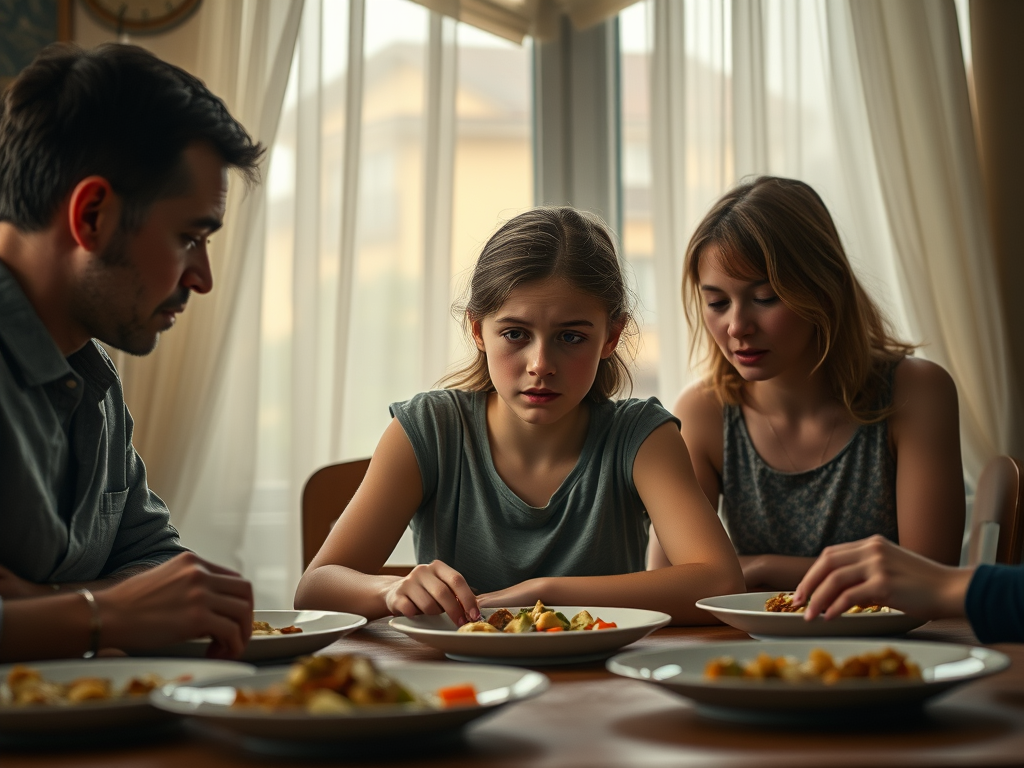
When I was ill, meals were often the hardest moments of the day. Not just for me, but for my parents too. Food refusal turned our home into a place of tension, fear, and exhaustion.
I could feel my parents trying everything: explaining, pleading, getting angry, giving up. None of it really worked—not because they were doing something wrong, but because refusal wasn’t about stubbornness.
It was about fear.
I’m writing this for parents who are living this daily and wondering how every meal turned into a battle. I’m not writing as a clinician, but as someone who once sat on the other side of the table.
What refusal felt like from the inside
When I refused to eat, it wasn’t a calculated decision. It felt automatic.
My body reacted as if something unsafe was happening. My chest tightened, my thoughts raced, and my only focus became stopping the situation. Eating didn’t feel neutral—it felt threatening.
From the outside, it may have looked like control or defiance.
From the inside, it felt like panic.
Understanding this doesn’t make meals easy. But it explains why arguing, bargaining, or reasoning rarely helped in the moment.
What didn’t help (even when it came from love)
Looking back, there were things that unintentionally increased my distress.
Long explanations when I was already overwhelmed.
Debates about logic or health while fear was high.
Being offered too many options.
Feeling that every refusal turned into a big emotional moment.
Hearing how much my eating was hurting others.
None of this made eating feel safer. It made the fear louder.
What helped more than words
What helped me wasn’t being convinced to eat.
It was being met with calm structure.
The moments that helped most were quiet and predictable.
My distress was acknowledged, but the boundary stayed.
The eating disorder was separated from who I was.
Parents spoke less, not more.
The focus stayed on the next small step, not the whole meal.
There was repair after hard moments, not punishment or silence.
Those moments didn’t magically fix meals.
But they slowly taught my nervous system that fear could rise and fall without everything falling apart.
Why calm repetition mattered
I didn’t need new explanations every meal.
I needed the same response, again and again.
Over time, repetition did what reassurance couldn’t. My body learned that meals happened, emotions peaked, and then things settled. That learning took time—and consistency.
This is why refusal often gets worse before it gets better. It doesn’t mean the approach is failing. It often means fear is being challenged.
If meals feel impossible right now
If your child refuses to eat daily, and every meal feels like a crisis, you are not failing. This is incredibly hard.
If you are ever concerned about immediate risk—medical instability, collapse, confusion, or self-harm—please seek urgent professional help.
And know this: you don’t have to navigate this alone.
If you want more support
I go much deeper into fear-driven refusal, meal dynamics, and calm structure in my full e-book:
https://payhip.com/AnorexiaParentGuide
If you want help responding in real time—especially when refusal escalates—I also offer 1:1 Parent Guidance Sessions, where we look at your specific patterns and find words and boundaries that actually fit your family:
https://anorexiaparentguide.com/parent-guidance-sessions/
A final word to parents
Refusal in anorexia is rarely about food alone.
It’s about fear, safety, and a nervous system that’s overwhelmed.
With calm structure, support, and repetition, that fear can soften.
I know—because it did for me.
Leave a Reply